Executive Summary
Axion Solutions was commissioned by Natural England to undertake a comprehensive GIS update of the national Open Mosaic Habitat (OMH) inventory.
The project involved a structured, desk-based geospatial review of thousands of habitat polygons originally mapped in 2013. Using updated aerial imagery, digitising standards, and the 2024 Review Rules framework, Axion:
- Removed polygons where OMH had been lost
- Amended boundaries where habitat extent had changed
- Reviewed retained polygons for ongoing compliance
- Delivered a fully revised, quality-assured GIS dataset
- Produced a publishable, open-data-ready OMH layer
The updated dataset directly supports:
- Priority Habitat Inventory (PHI) updates
- Local Nature Recovery Strategies (LNRS)
- Biodiversity Net Gain (BNG)
- 30 by 30 nature recovery commitments
- National spatial planning and environmental decision-making
This project demonstrates best practice in habitat mapping, geospatial data governance, aerial imagery interpretation, and environmental GIS quality assurance.
Project Context
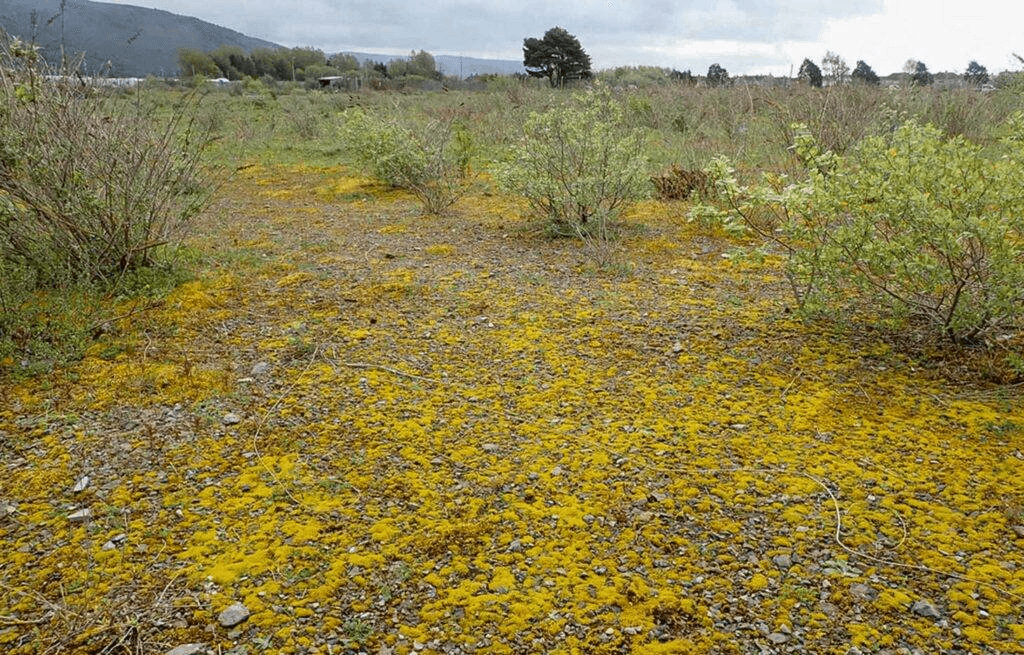
Open Mosaic Habitat on Previously Developed Land (OMH) is a recognised UK Priority Habitat.
The draft national OMH inventory was originally published in 2013 and had not been systematically updated since. Given the dynamic nature of previously developed land, significant change was anticipated due to:
- Urban redevelopment
- Infrastructure expansion
- Vegetation succession
- Canopy encroachment
- Land-use conversion
A 2024 screening exercise identified:
- 2,086 polygons for potential removal
- 2,553 polygons requiring boundary amendment
- 3,771 polygons requiring retention review
Natural England required a robust, defensible, and auditable GIS process to produce a revised national OMH dataset suitable for publication on the open data portal.
Project Objectives
The contract required delivery of:
- A revised OMH GIS layer containing retained and amended polygons
- A separate audit layer containing removed and pre-amendment polygons
- Attribute tables aligned with PHI standards
- A short technical report explaining methodology and outcomes
- Data deliverables in ESRI Shapefile or Geodatabase format
All outputs needed to:
- Align with PHI data submission standards
- Be compatible with Ordnance Survey MasterMap spatial framework
- Meet digitising standards (1:2500 resolution)
- Contain no overlaps, slivers, spikes, or geometry errors
- Be publishable under Open Government License requirements=
Methodology Overview
The project followed a structured five-task methodology defined within the specification.
Task 1 – Data Exploration and Standards Confirmation
- Review of the 2013 draft OMH dataset
- Review of 2024 Review Rules outputs
- Agreement of digitising standards
- Confirmation of attribute structure
- Project initiation meeting and governance alignment
This stage ensured clarity of data capture standards before edits commenced.
Task 2 – Removal of Polygons
Task 2 involved the desk-based review of 2,086 polygons identified as candidates for removal.
Each polygon was assessed using:
- APGB aerial photography (multiple years where available)
- Supplementary Google and Bing imagery
- The 2024 Review Rules flowchart
- The 0.25 hectare threshold guidance
Removal decisions were based on:
- Confirmed development (residential, industrial, infrastructure)
- Habitat loss to succession
- Dense canopy cover exceeding OMH thresholds
- Clear land-use change
For every polygon:
- A single removal outcome was recorded
- Justification fields were completed
- Professional judgement notes were logged
- Uncertain cases were flagged for joint review
All removals were independently quality assured before finalisation.
Task 3 – Boundary Amendments
Task 3 focused on 2,553 polygons requiring partial amendment rather than full removal.
Process included:
- End-to-end testing of Review Rules application
- Systematic interpretation of flowchart decision points
- Redrawing boundaries to retain only qualifying OMH extent
- Application of 1:2500 digitising precision
- Alignment to OS MasterMap wherever possible
Key complexity areas included:
- Scrub percentage thresholds (10–15%)
- Amenity grassland overlap
- Partial site redevelopment
- Seasonal aerial imagery variation
Where flowchart outputs alone were insufficient, professional ecological interpretation was applied in consultation with Natural England.
This ensured consistent national application of OMH criteria.
Task 4 – Review of Retained and “Retain with Uncertainty” Polygons
Task 4 assessed 3,771 polygons originally categorised as retained.
The review focused on identifying:
- Post-2024 vegetation succession
- Canopy encroachment
- Newly constructed infrastructure
- Subtle boundary erosion
Edge cases were escalated for joint scrutiny to ensure defensibility and transparency.
This task strengthened dataset robustness and reduced long-term uncertainty within the OMH inventory.
Data Governance and Attribute Alignment
All revised datasets were structured to align with Priority Habitat Inventory (PHI) standards.
Attributes included:
- Main habitat (HabCodes)
- Habitat features (FeatCodes)
- Additional habitats (AddHabs)
- Data source (PrimSource)
- Survey date (PSDate)
- Priority determination category (PRIDET)
Geometry rules enforced:
- No overlapping polygons
- No slivers or gaps
- Shared boundaries where appropriate
- No spikes or bowties
- Properly digitised holes
All outputs were provided in:
- ESRI Shapefile
- ESRI Geodatabase format
Datasets were fully publishable as open government data.
Quality Assurance Framework
Quality assurance was embedded throughout delivery:
- Primary GIS analysis by Lead GIS Analyst
- Independent peer review of edits
- Senior technical oversight for complex cases
- Metadata recording for audit traceability
- Version-controlled datasets
Every edit is:
- Defensible
- Justified
- Transparent
- Replicable
No risks were identified to data quality, auditability, or final deliverables.
Key Technical Learnings
Application of the 2024 Review Rules demonstrated that:
- The flowchart operates as a decision-support framework, not a rigid algorithm
- Scrub threshold interpretation requires ecological judgement
- Amenity land-use contexts require nuanced analysis
- Case-study calibration strengthens national consistency
Joint review of complex examples improved rule clarity and strengthened long-term defensibility of the OMH inventory.
Deliverables
The final contract outputs included:
- Revised OMH GIS layer (retained and amended polygons)
- Audit GIS layer (removed and pre-amendment polygons)
- Updated attribute tables aligned to PHI standards
- Short technical report in Word and PDF format
- Fully documented methodology
All deliverables were supplied on schedule and in accordance with the contract timetable.
Strategic Impact
The updated OMH dataset now provides:
- Accurate national mapping of Open Mosaic Habitat
- Reduced uncertainty in previously developed land habitat status
- Stronger evidence base for planning authorities
- Improved spatial support for Biodiversity Net Gain calculations
- Reliable input to Local Nature Recovery Strategies
- Enhanced Priority Habitat Inventory accuracy
This project demonstrates best practice in:
- National habitat inventory maintenance
- Environmental GIS data management
- Habitat boundary digitisation
- Spatial audit transparency
- Open data publication readiness
Conclusion
Through a structured, quality-assured GIS methodology, Axion Solutions delivered a fully revised, defensible, and publishable Open Mosaic Habitat dataset for Natural England.
The project strengthens the UK’s environmental evidence base, supports biodiversity policy implementation, and ensures that OMH mapping reflects current land-use reality.
This case study highlights Axion’s expertise in:
- Habitat mapping
- Geospatial data governance
- Aerial imagery interpretation
- Environmental compliance datasets
- National-scale GIS quality assurance
The updated OMH layer is now aligned with Priority Habitat Inventory standards and ready for integration into national policy, planning, and biodiversity recovery frameworks.